
How to Soundproof a Thin Rental Wall or Door
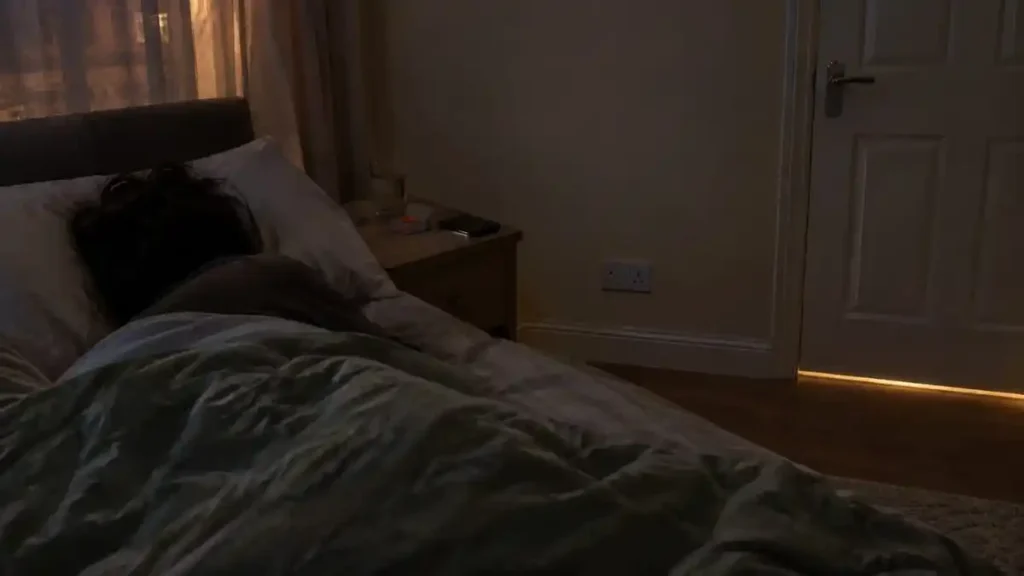
Walls and doors in UK rental flats are mostly thin so sound can pass straight through them. Because of this you can hear your neighbour’s voice and noise clearly and it becomes very hard to sleep at night or work during the day just like it used to happen to me. At night when I started to fall asleep I could clearly hear the TV from the neighbour next door and the sound of them talking.
On top of that the sound of footsteps from the neighbour upstairs would not let me sleep all night and then in the morning I did not feel as fresh as I should so I could not do any proper work for the whole day.
And as a renter the biggest problem is that you cannot break the walls or do any permanent building work and on top of that there is the fear of losing your security deposit. Because of this many renters including me make mistakes that they should not make like wasting their money on cheap acoustic foam or soundproofing paint which really do not stop the noise at all.
But you do not need to worry. You do not need to spend thousands of pounds to make your rental room quiet.
In this complete guide I will tell you the ways and tips that I used to stop my neighbour’s noise. We will talk about some of the best budget-friendly and rental-friendly ways for UK renters which will cost from about £20 to £100+. We will also see how to follow the UK fire safety rules and how to go to the local council or take legal steps (Environmental Protection Act 1990) if your neighbour’s noise does not stop at all.
Let’s see how you can turn your rental room into a calm and peaceful place without any permanent damage and without worrying about your deposit!
To soundproof a thin rental wall or door in the UK cheaply and easily first seal the air gaps around the door (for £5–£10). After that add natural mass (weight) such as a full bookcase, heavy curtains or acoustic blankets. Finally reduce the echo in the room with rugs and panels. These renter-friendly ways work much better than cheap acoustic foam. Remember expect a noticeable drop in the noise not complete silence.
Key Takeaways
- First of all seal the gaps. Sound goes through the same places that air goes through.
- Mass (weight) stops sound. Foam only reduces the echo inside your room. It does not stop your neighbour’s voice.
- Before you stick anything, drill, or paint, check your tenancy agreement.
- Never remove block or change the self-closer or the seals on your flat’s front door (this is often a fire door).
- Even with a small budget of £20 to £50 you can see a difference by sealing the door and moving your furniture around.
- The real result: less noise and fewer bangs but not complete silence.
Quick Summary: Renter-Friendly Soundproofing Fixes at a Glance
| Fix | Indicative cost | Removable? | Typical impact |
|---|---|---|---|
| Clamp-on door sweep | £5 – £10 | Yes | Good for hallway noise under the door. |
| Door frame seal strip | £10 – £15 | Usually | Good if the door rattles or light shows round it. |
| Full bookcase or wardrobe on the shared wall | £0 if you own it | Yes | Noticeable on voices and tv. |
| Moving blanket or heavy curtain on a tension rod | £10 – £30 | Yes | Modest |
| Rug aur soft furnishings | £20+ | Yes | Reduces echo, not neighbour noise. |
| Freestanding acoustic panels | £20 – £60 | Yes | Echo control, small blocking effect. |
*Prices are indicative estimates.Check current prices before buying.*
Airborne vs Impact Noise: Why Thin Rental Walls and Doors Let Sound Through
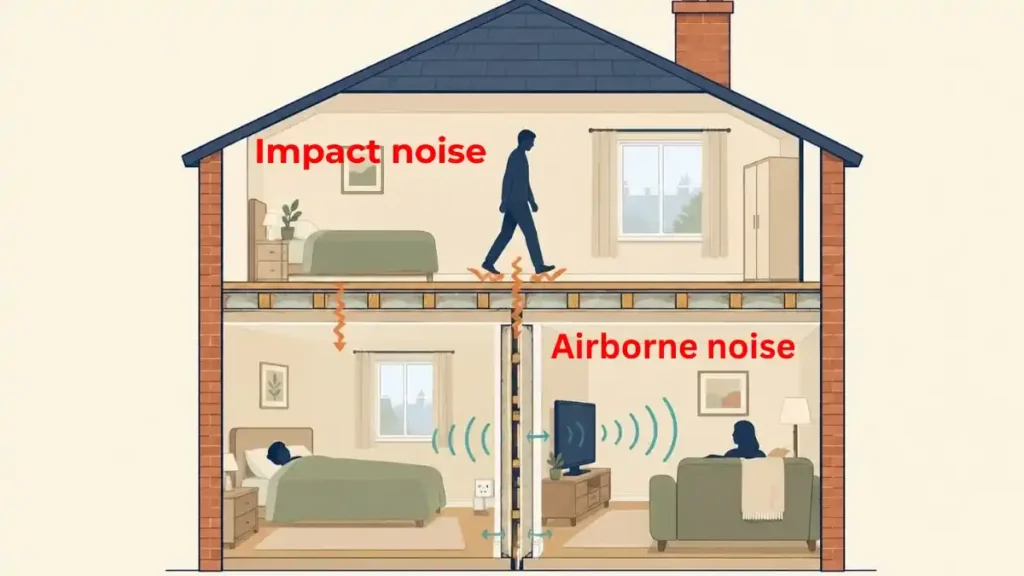
If you can hear your neighbour’s TV or their talking as if they are sitting in your room there can be two reasons for this: the first is thin construction and the second is small air gaps. And before you fix it the right way we need to understand where the sound is coming from and what kind of sound it is so that your money and time are not spent on the wrong things.
In most UK rental flats (especially converted Victorian houses and modern timber frame flats) the walls are not made of bricks. They are made of plasterboard stud walls which are completely hollow inside and have very little or no sound insulation. On top of this in most UK rental flats the internal doors and in some flats the entrance door too are hollow core. From the outside they look like a thin layer of wood, but inside they have a honeycomb of cardboard. This kind of door makes sound even louder (amplifies it) like a drum. And to fix all of this you first need to understand what kind of noise it is:
- Airborne Noise: This is the sound that travels through the air and reaches your ears like your neighbour’s talking, the TV audio or music. It is also the most annoying one when you are sleeping at night and the sound of the TV comes from the next flat and does not let you sleep. It is easy to stop just seal the gaps where air is coming through and put a heavy curtain on the wall which will muffle the sound.
- Impact Noise: This is the sound that is made by a physical hit or vibration like the sound of the upstairs neighbour walking (footsteps) a door slamming or the vibration of a washing machine. It is impossible to block this in a rental flat because this sound does not come through the air. It comes into your room through the wood or concrete frame of the building. To block it you would need to do building work (decoupling construction) and it is impossible in a rental flat because we cannot do this under the tenancy agreement.
Soundproofing vs. Acoustic Treatment: The Foam Trick
The biggest mistake that renters make is that they buy cheap acoustic foam from Amazon and stick it on the wall thinking that now the neighbour’s sound will not come in and will stop right there.
For soundproofing you need heavy mass (weight) and airtight sealing which do not let the sound pass through the wall or door.
Things like acoustic foam only absorb the echo inside your room. If you stick foam squares on the walls your own voice will echo less in your room but your neighbour’s sound will not be stopped at all.
There is only one practical formula for rental soundproofing and I have tried it myself too: first seal the air gaps then add non-permanent mass (weight) and finally absorb the rest of the echo inside the room with soft furnishings. This does not stop the sound completely but it reduces it by a lot.
How to Find Exactly Where the Noise Is Coming From
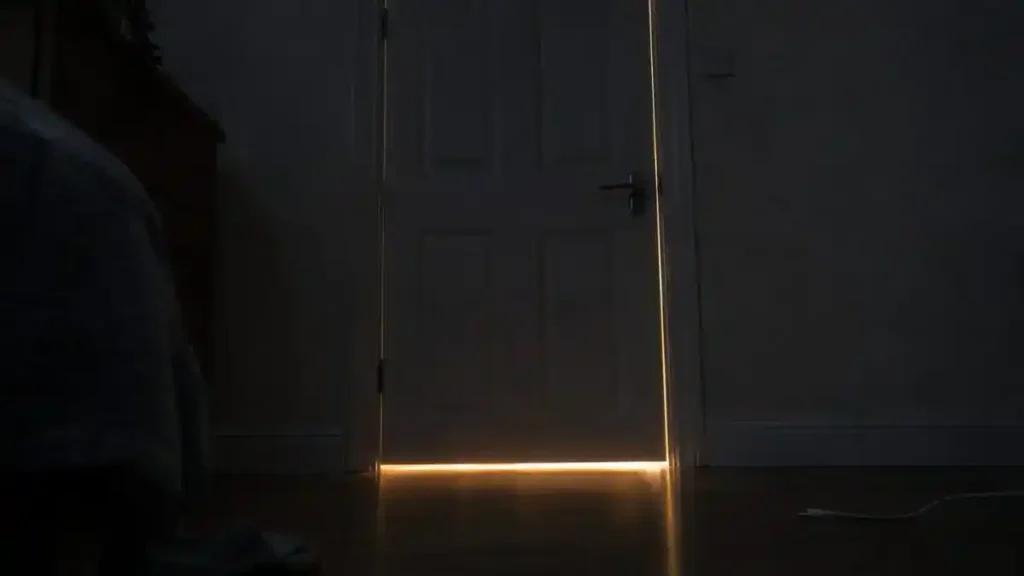
Many renters spend £100 to £200 on heavy panels and curtains without checking when the noise is actually coming from under the door or from a socket hole. So before you buy anything find the exact place where the noise is coming from.
In UK rental flats especially converted Victorian flats noise often comes into the room through back-to-back electrical sockets inside the plasterboard wall the edges of the floorboards and the part under the door. And you can find the exact place with some zero-budget tests. These are the 5 points that I followed myself to find the exact place:
- The light test: This is the best way to find where the sound is coming from. Turn off all the lights in your room and close the door and window too. Then turn on the light in the hallway outside or turn on the light in the room on the other side of the wall where you feel the most noise. Then check where the light is coming in from from any edge or gap. About 80% of the airborne leak is coming from that same place.
- Door wobble test: Push your closed room door gently. If the door rattles or moves inside the frame it means the perimeter seals are bad and the frame is not airtight.
- The Ear to wall test: On the wall that is shared with your neighbour stand quietly and take a toilet roll tube. Put one end of it to your ear and move the other end very close to the sockets light switches radiator pipes and skirting boards (without touching anything electrical) and listen. Seal first the place where the sound is the clearest. This works like a DIY stethoscope.
- The clap test: Stand in the centre of your room and clap loudly. If a sharp echo comes back then your problem is not sound blocking (this means the outside sound is not coming in). Your problem is echo inside the room. For this you will need soft furnishings.
- Decibel App Measurement: Download any decibel meter app on your mobile. It does not give a professional acoustic reading but it shows you a rough comparison before and after you fix the room.
From the chart below you can understand what kind of noise you have and what the cheapest fix for it is.
Do not do all these fixes in one go. Try one fix at a time, and check the sound and volume before and after to see which fix made a difference.
Can You Soundproof a Rental Without Losing Your Deposit?
Yes of course you can! But instead of permanent construction you will have to use “Non-Permanent & Removable Solutions”. Because whenever a renter rents a flat in the UK the renter pays 4 to 6 weeks of rent (£1000 to £1500) to the landlord or to a deposit scheme (TDS/DPS) and under the contract (AST Agreement) we cannot drill into the wall spoil the paint or make any permanent change. And if you damage a wall the cost of wall repainting and plaster touch-ups in the UK is £200 to £800 and if the damage is bigger the landlord can legally take 100% of your deposit.
But we can solve this problem without losing the deposit if you stay with 100% freestanding and removable fixes. Before you buy anything check your tenancy agreement and when you move into the flat take good photos of the room. Also before using any kind of sealant, drill, paint or screw on walls or doors, get written approval from your landlord.
Also the landlord can only take money from your tenancy deposit for damage that is more than “fair wear and tear”. So it is very important to protect the original condition of the walls and doors. As soon as you move in take clear date-stamped photos of the walls door frames and sockets and keep them in your records so that the landlord cannot take money from your deposit.
From the table below you can see which fix is how safe and for which fix you will need to ask your landlord for permission:
If you want to ask your landlord about socket sealant or a door draught seal you can send this short email to your landlord:
Subject: Minor non-permanent noise reduction request – [Your Flat Number/Address]
Hi [Landlord/Agent Name],
I hope you are well. I would like to make a few minor, non-permanent adjustments to reduce noise in the flat, such as fitting a removable door sweep and applying sealant around the socket edges.
All additions are small and 100% reversible, and I will ensure the walls and frames are fully restored when I move out. Could you please confirm in writing if this is okay?
Thanks,
[Your Name]
Note: Tenancy laws are a little different in Scotland and Wales so check the local housing rules there. Also before making any change to the main front door of your flat always ask your landlord first because main entrance doors are fire-rated (FD30) and unapproved changes are not legally allowed on them.
How to Soundproof a Thin Rental Wall Cheaply
Sound passes through thin walls because they do not have enough mass (weight). And if you want to soundproof these thin walls cheaply and without any construction then we need a combo of 4 things:
- Sealing gaps
- Adding freestanding mass
- Reducing room echo
- Hanging heavy fabric with a tension rod
Every step helps a little and all of them together make a clear difference.
Can Bookshelves or Wardrobes Reduce Noise Through a Thin Wall?
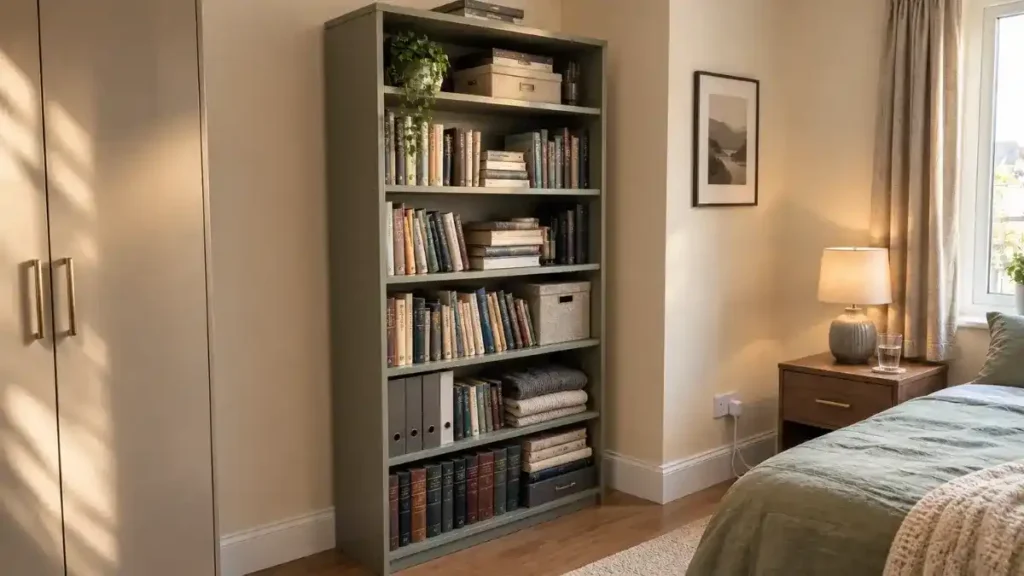
If the sound is coming from your neighbour’s side you can follow this. First just understand that to stop sound walls need weight (density). When you put a bookcase full of books or a wardrobe full of clothes next to the wall the sound cannot pass through easily and it becomes muffled. This does not mean that you can put a small piece of furniture like a rack there and stop the sound. The more coverage you have the better the result will be. Covering the whole wall will be the best.
Covering the whole wall will be the best. A wardrobe works best when it is properly packed, so use free hacks to organise a small wardrobe to fit more clothes in without buying anything new.
If this furniture (wardrobe, chest of drawers and bookcase) is already in your flat then this fix will cost you no money. If your bookcase is heavy or tall please check that it is stable so that it does not fall. You can also ask your landlord and use anti-tip safety straps (brackets that stop furniture from falling).
Advanced DIY tip: If the noise is very high you can put a sheet of Mass Loaded Vinyl (MLV) on the back board of your bookcase which reduces the noise even more. But for normal noise books and clothes are enough.
Do Soundproof Curtains and Heavy Fabric Actually Work?
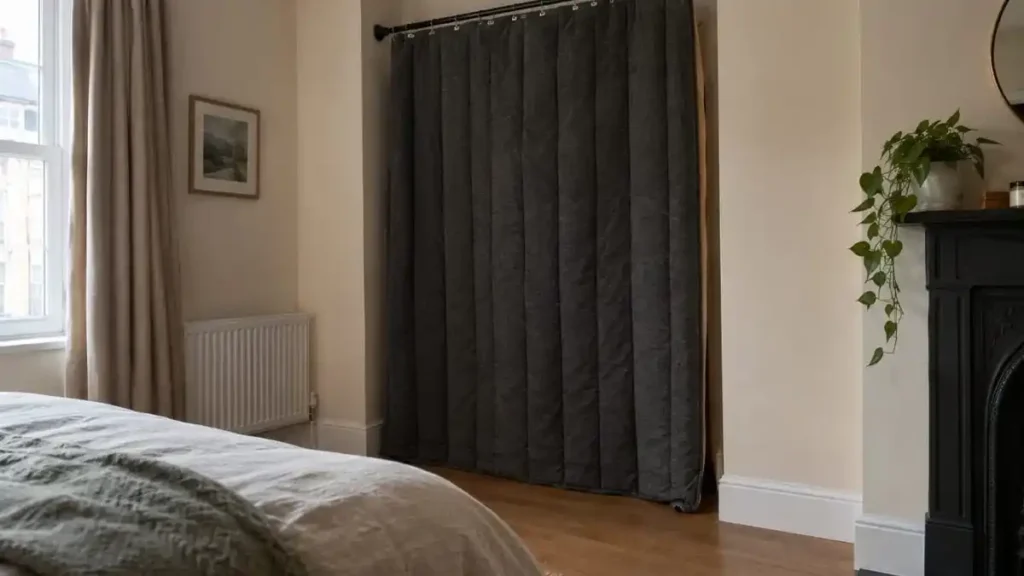
This is where a renter gets very confused about whether they should buy soundproofing curtains or not because they are not sure if they will work and how they would put them up in their room without drilling.
Curtains do not block sound 100% because fabric does not have solid mass (weight). But they reduce high frequency noise and room echo and make the sound softer. Normal and fancy curtains are completely useless. Apart from heavy velvet curtains, moving blankets (which are used for packing) are a very cheap and dense (thick) option. You can get them for £10 to £20 and they work better than expensive acoustic foam.
The best option to hang curtains or moving blankets in a rental flat without drilling the wall is to use a Tension Rod. You can put it anywhere you want to hang the curtain. And whenever you put up a curtain to stop noise always cover the wall from the floor to the ceiling. If there is a little air gap between the wall and the curtain the absorption will be even better.
You can also use Mass Loaded Vinyl (MLV) a thick rubber sheet that can stop more sound than curtains and blankets and it is also very easy to use and safe for a rental. You can cut it to size and put it on your wall, and you can take it down easily when you move out of the flat. But it is very heavy and costs up to £100 so use it only when the noise is very high.
How to Seal Small Gaps Around Sockets, Pipes and Skirting
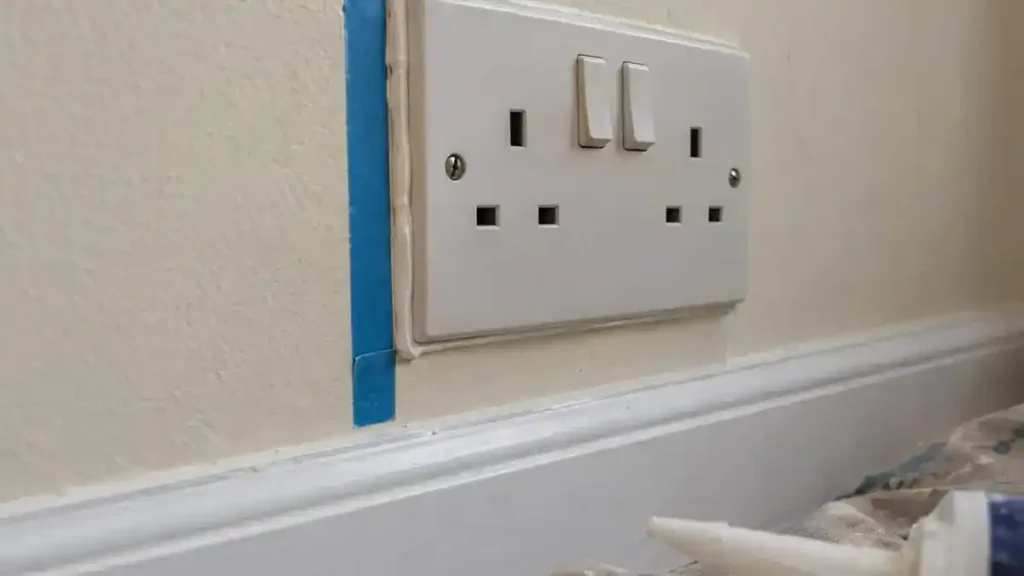
If you have already put furniture and a curtain on the wall and you can still hear your neighbour’s voice very clearly there is a very good chance that it is coming from hidden air leaks meaning around the sockets, radiator pipes or skirting boards. Understand one rule wherever air can pass sound can also pass easily. Let’s understand these one by one and fix them:
- Electrical Sockets: In converted UK flats the sockets on both sides are right opposite each other which makes empty spaces (holes) behind the plasterboard and sound passes through them easily.
- Before fixing this take permission from your landlord. Instead of opening the socket plate yourself seal the gaps around the outer edges of the frame with flexible acoustic sealant (the kind that does not dry hard and crack, and becomes like rubber). For bigger gaps first put in backer rod. Faceplates with acoustic putty are also a good option and you can use them too provided internal wiring is not disturbed.”
- Radiator Pipes & Floorboard Gaps: Where the radiator heating pipes go into the wall or floorboard there are always small gaps. To fix these you can use acoustic caulk / flexible sealant or pipe collars. This is a sixty-second fix and it is completely invisible.
- Skirting Boards: Near the skirting boards under the carpet or laminate floorboard there is a gap of 2mm to 5mm and the noise from below or from your neighbour passes through it and comes into the room. To fix this we can seal the edges with draught excluder tape or clear acoustic caulk.
- Deposit Safety Rule: Always use acoustic caulking (acoustic sealant) instead of normal silicone sealant which is paintable and can be peeled off or cleaned easily so that the landlord does not object. Before doing anything take permission from your landlord once. And never block fresh air vents or extractor fans for soundproofing because blocking them makes mould and damp build up.
Do Acoustic Panels Really Work on Thin Walls?

This is where a renter is very confused and misinformed. They have seen foam tiles in some YouTube video or on the internet and they think that using them will end the neighbour’s sound forever. They think that these cheap (£10 to £20) square foam panels from Amazon will stop the sound.
But here too there are many kinds of acoustic panels (like Acoustic Foam Wall Panels / Egg Crate Acoustic Foam Panels and Wooden Acoustic Slat Wall Panels / Polyester Fiber Acoustic Wall Panels). There is a big difference between them. Let me explain and I will also tell you which one you should take which can stop the sound and which I use myself too.
- Acoustic Foam Wall Panels: These are the same cheap panels that you see on the internet which cost £10 to £20. They are used when there is noise made in your own room and they make it softer. They do not reduce your neighbour’s noise because they are very lightweight and cannot stop your neighbour’s sound. They only reduce the echo in your room.
- Wooden Acoustic Slat Wall Panels: You can use these because they have heavy felt fabric at the back which gives some absorption and mass. And they are 10 times better than thin foam at stopping sound. They make heavy curtains and white noise a little softer and gentler so the room feels a little calmer but the noise does not stop completely.
To put these up never use spray adhesive or strong tape because when you take them off they can spoil both the paint and the plaster of the wall. Instead you can put them up with Command Strips or Velcro or you can first stick them on a Plywood or MDF sheet and then lean that sheet against the wall.
Soften the Room: Rugs, Headboards and Soft Furnishings
If your room is empty meaning there is only a bed and nothing else then even a small sound from your neighbour spreads all over the room. This happens when the floor of your room is hard (like laminate or a wooden floor) which makes the sound even bigger. To fix this put a thick rug or carpet on your floor with a cushion layer (underlay) under it and this reduces the echo of the room by a lot.

Also if your bed is against the wall you share with the neighbour use a headboard made of cloth or padding (an upholstered headboard) instead of one made of metal or wood. It becomes a shield between the sound coming from your neighbour and your ear. You can also put pillows and cushions in the room and if the room is a bit bigger a sofa and other fabric things which make your neighbour’s sharp piercing sound softer.
How to Soundproof a Rental Door Cheaply
In UK rental flats noise comes more from the doors than from the walls. Hallway sounds the sound of walking and the neighbour’s voice also come most through the doors because the doors of flats are thin and hollow inside. And more noise comes from the gaps on all four sides of the door and the empty space at the bottom and less from through the door itself. We can seal these gaps very easily and cheaply with some ways. Because this is a rental flat we cannot put in a new door or a soundproof door by ourselves as the landlord does not allow this. Let’s understand this one by one too.
Is Your Door Hollow or Solid?
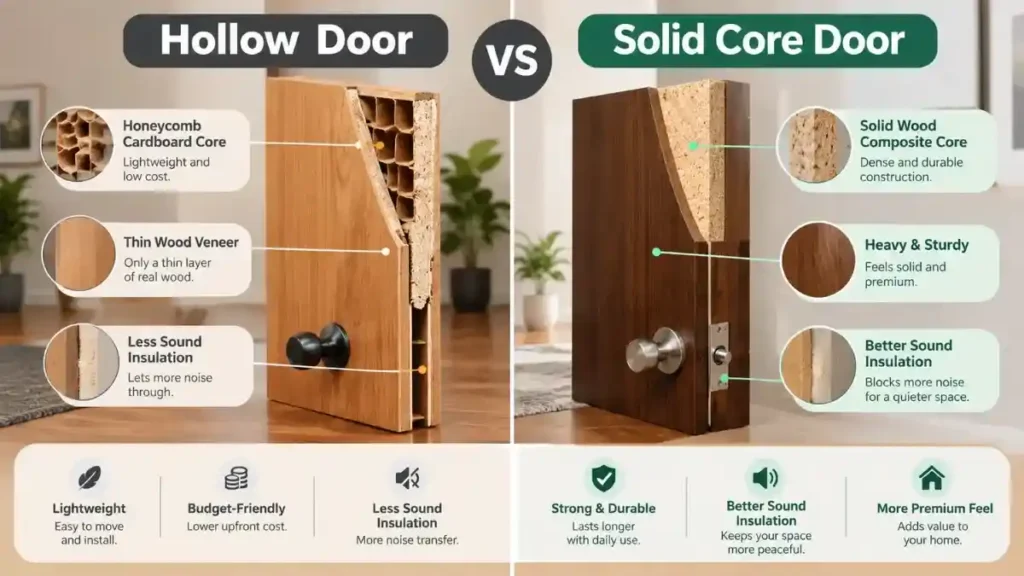
First of all check whether your door has a hollow core or a solid core.
Door Check: To check the door knock on it with your finger. If the sound is like an empty drum it is hollow and if the sound is solid and heavy it is a solid door. You can also find out from the thickness of the door. For this measure the thickness of the door with a tape measure. If the door is 35mm to 44mm thick and you lift it slightly with your hand and the door closes it means the weight of the door is around 10kg to 15kg.
If the door does not close fully the weight of the door can be more than 30kg and if you feel it is heavy to close the door then it is a solid core door. Understand it like this.
- Hollow Core Door: This is very light. From the outside it looks like only wood but inside it is empty and sound passes through it easily.
- Solid Core Door: This is very heavy and it is made of solid wood or heavy wood composite inside which already stops the sound to a good extent.
You can stop the noise by sealing the gaps on all four sides and the empty area at the bottom well. After that with the help of a tension rod you can put a heavy curtain or moving blanket in front of the door which stops the noise to a good extent and makes the room calm. This can be a very useful tip for you.
Door Seals and Weatherstripping for the Frame
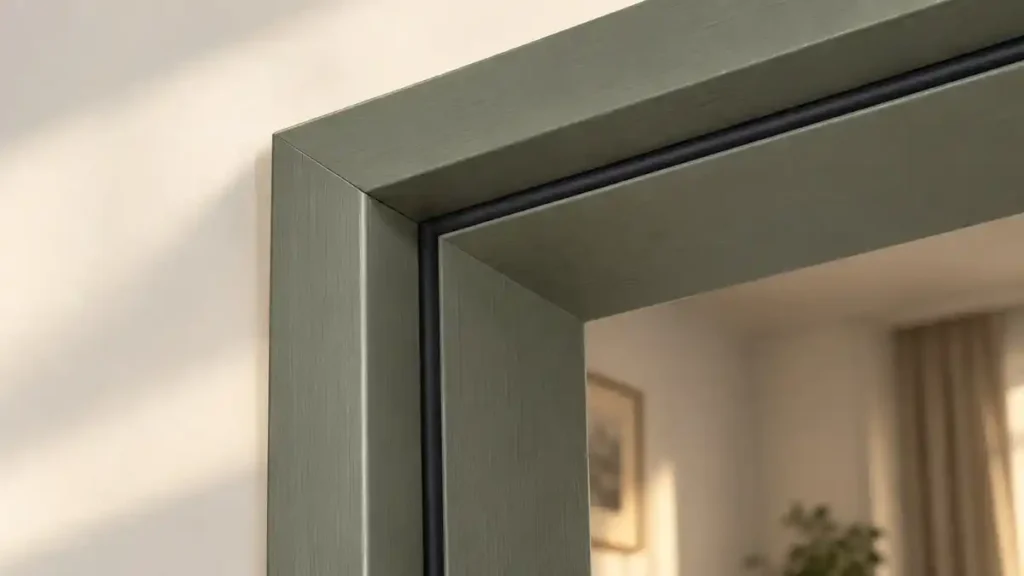
No matter how heavy the door is the gap near the frame and between them where air can pass is also a way for noise to pass and reach you. So sealing this gap is the very first step. To deal with these you can find many kinds of strips online and in shops but they get damaged very quickly or renters like me cannot use them. But there is one strip that I use myself called the self-adhesive rubber strip which is the best.
Self Adhesive Rubber Strip: This strip is D shaped. It is the best because it is long-lasting, seals the gap tightly, and is also cheap. It presses down very well (gets compressed) so its rubber seal is better. It has strong adhesive tape on the back so you do not need any screws or drilling. Before putting it on clean the dust and dirt from the frame well so that the tape sticks properly.
Then stick it well on the inside of the door frame where the door hits at the top and on both sides. And when you want to take it off give it a little heat with a hair dryer and you can remove it easily without spoiling the paint.
If you see a big gap between the door frame and the wall you can close it with flexible sealant but before doing this you must take permission from your landlord.
Door Draught Stoppers and Door Sweeps for the Bottom Gap
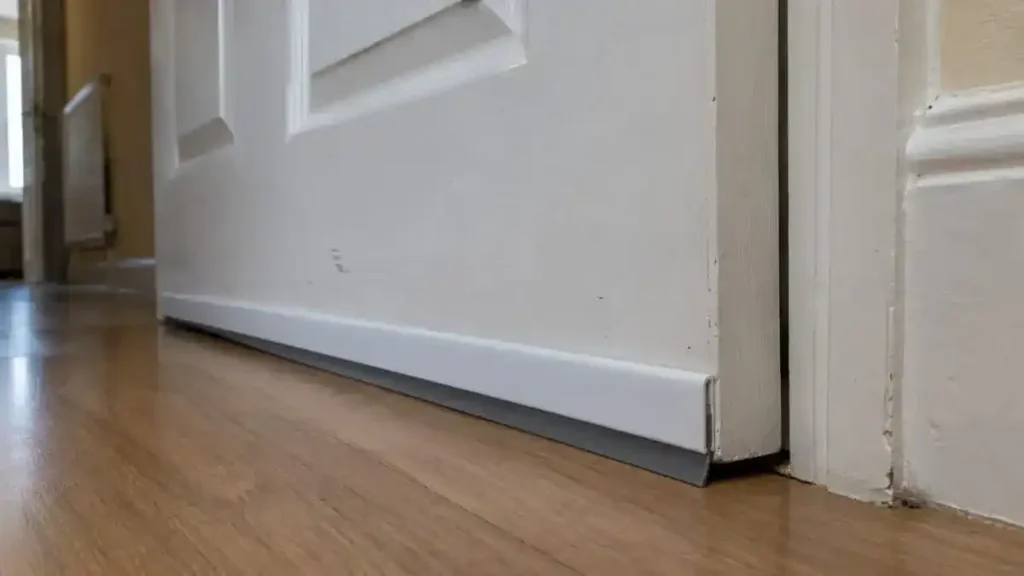
Most of the hallway noise comes from this bottom part of the door so we can stop this as well. But always remember one thing do not seal the door so much that air cannot pass at all. If you have a gas heater in your room or something that burns fuel or there is a damp/condensation problem then air flow is needed so that there is no shortage of oxygen there. If you have no such problem you can use these products:
Door Draught Stoppers: These are U-shaped and you can use them on an internal door. They are the best and they do not need drilling or screws. They are clipped under the door and you can cut them to size as you like and you get them for less than £10. They block hallway sound and are also very easy to use and the landlord also has no problem with them.
Door Sweeps: We can put these on the entrance door and they are very strong. They are made of metal and a rubber gasket which stops sound even better. But to put them on you need screws so you must take permission from the landlord before putting them on.
Wet clothes drying indoors put a lot of moisture into the air, and a well-sealed door can trap it in the room. See how to dry clothes in winter without a tumble dryer so your room stays dry.
Internal Bedroom Door vs Flat Front Door (Fire Door Rules)
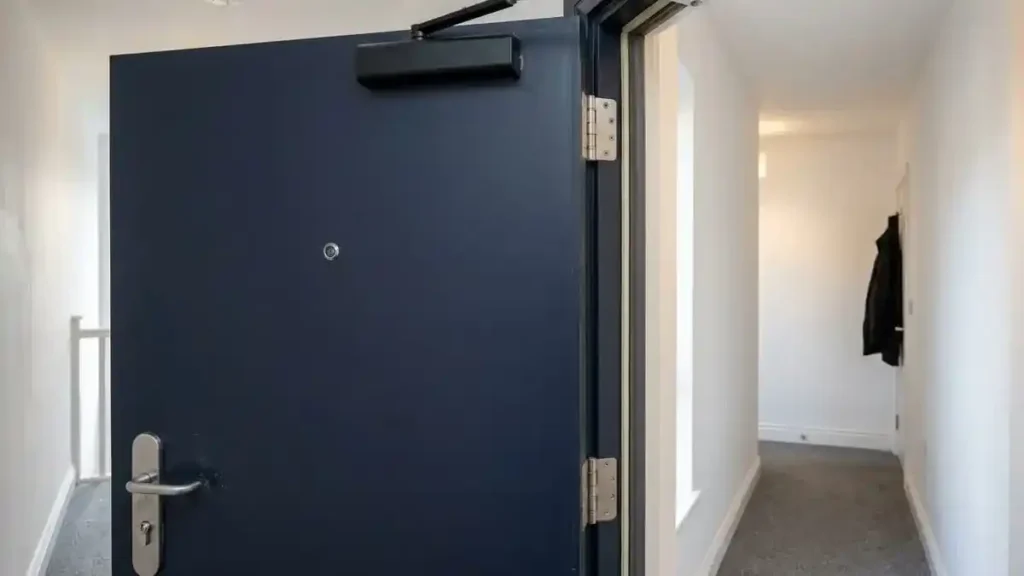
You are free to do things to your bedroom door but you cannot do anything to the main front door of your flat. It is made under the rules of fire protection (FD30 fire door rules) and we can understand it like this:
Internal Bedroom Door: This is the door inside the flat like our bedroom door. We can do anything on it like putting on non-destructive strips, clamping on a draught stopper or hanging a moving blanket with over-door hooks. There is no strict fire safety rule on it but only as long as the exit way is not blocked.
Flat Front Door (Main Entrance Door): This is the front door of your flat that opens out into the hallway. It isn’t just a normal door—it’s a special fire door (known as an FD30) designed to hold back fire. Under UK fire safety rules changing or damaging this door can cause legal trouble and risk your security deposit so you must never drill holes or put screws into it.
You might see online videos suggesting screw-on sweeps but that is not allowed. Always check with your landlord or building management first. Also never remove the automatic door closer at the top don’t paint over the fire seals and never hang anything like a heavy blanket or sweep that stops the door from closing fully on its own.
How to Stop Hearing Your Upstairs Neighbour’s Footsteps
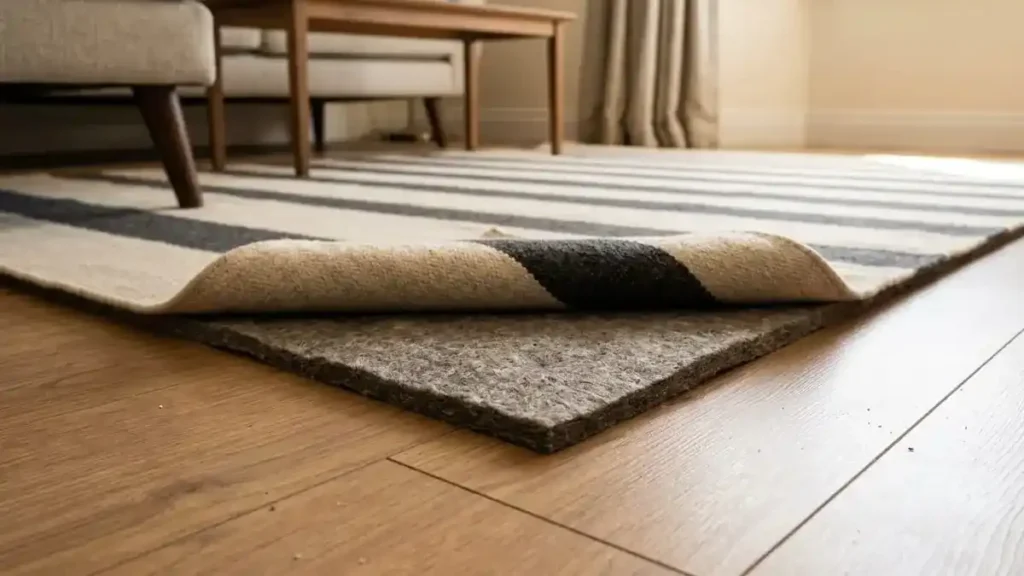
Here we need to understand that the sound of the upstairs neighbour walking does not come through the air. It vibrates in the structure of the building and comes down and we call this impact noise. So strips on walls or door seals do not work here because the cause is the sound coming straight from the ceiling above. If the noise comes from the walls or the door then as a renter you can put seals or curtains there but you cannot change the ceiling of your upstairs neighbour.
The best way is to go to the neighbour whose footsteps you can hear. Talk to them politely and with kindness and tell them that if they put a thick carpet or felt underlay on their floor it would help because I can hear the sound of their walking clearly downstairs which is very annoying. If they agree the footstep noise can reduce by a lot.
If they do not agree you can try these small options because you are a renter and cannot do construction and also the cost of it is very high. You can try these:
- White/Brown Noise Machine: This is the easiest way. Brown noise is a sound that hides the thumping and knocking of your upstairs neighbour so to some extent the sound is masked so your sleep does not get spoiled and you can sleep in peace.
- Furniture Move: Put your bed or desk in the part of the room where you hear the upstairs neighbour’s walking the least.
- Acoustic Ceiling Panels: You can put a soundproofing panel on the ceiling which can stop some of the noise but to put this up too you will need to take permission from your landlord.
- Legal Option: If the noise is very high does not let you sleep at night or has become a problem for your health then your last option is to make a noise complaint about it to your landlord or the local council (Environmental Health Department).
What Doesn’t Work (and Mistakes to Avoid)
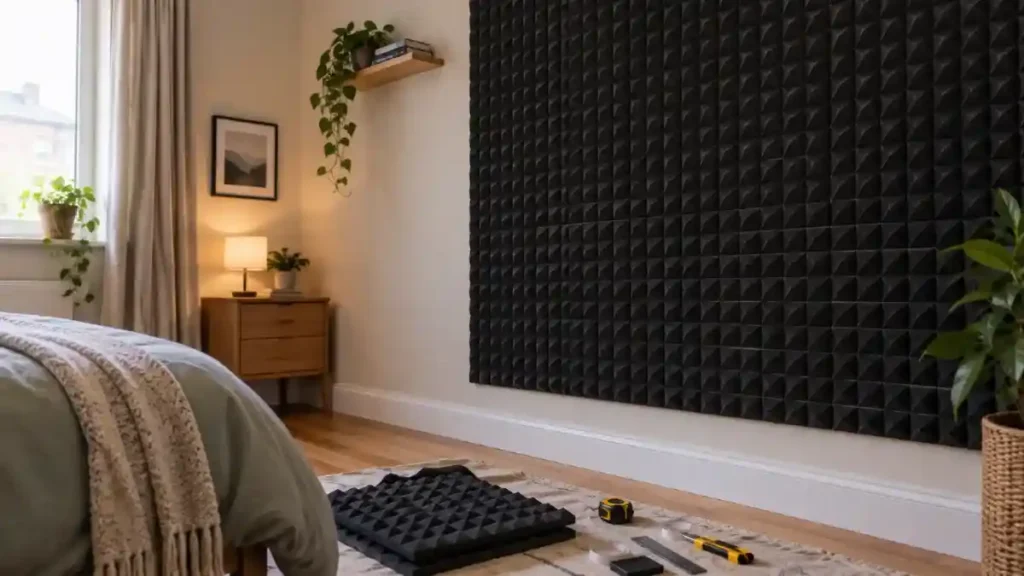
Some renters watch half-finished videos on the internet and YouTube and make mistakes like this and order things that have no use in real life and instead put their deposit at more risk. Let’s see one by one what these mistakes are that you should not make:
Common myths (that do not work at all)
- Acoustic Foam Panels: Often renters buy acoustic foam and stick it on their wall and think this will stop the neighbour’s noise but this does not happen. In fact this foam is used to remove the echo inside a room which is mostly used in professional recording studios. It cannot stop your neighbour’s noise.
- Thin Decorative Curtains: Thin normal and fancy curtains in the house look beautiful but they cannot stop noise because they have no weight (mass).
- Egg Boxes: Many renters watch YouTube or old internet videos and stick egg boxes on their wall thinking they will stop the sound but in reality they are of no use because they are thin and light. They have no power to stop sound. Instead they give the room an ugly look and these boxes also catch fire very quickly.
- Soundproofing Paint: In the market some paints have soundproofing written on them but a thin layer of paint does not have enough density to stop sound. It is only a way of marketing.
- Paying more because of an acoustic label: If acoustic is written on everything it is not necessary that the expensive one is the best. The real thing to look at is how that material works physically.
How to Avoid Such Mistakes
- Putting panels straight up and ignoring the gaps: If you did not close the gaps of the door and window and put expensive panels straight there the noise will still come into the room through these gaps. So always the very first step is sealing.
- Covering Very Small Parts: If the noise is coming from the whole wall and you cover only a part of the wall it will not make any difference so cover as much area as you can.
- Breaking the fire door rule: Do not put anything on the main door that stops the FD30 fire door from closing fully by itself. This can also become a problem for your deposit.
- Causing damage without the landlord’s permission: Spray glue, heavy tape, or hammering nails into the walls which can spoil the paint or plaster of the rental property is also the biggest reason for the deposit being cut when you leave the flat.
Soundproofing on a Budget: £20, £50 and £100+ Plans
You can follow this plan according to your budget. For example, by sealing the door gaps and moving the furniture around you can make a clear difference for less than £20. And at about £50 you can add heavy fabric and a rug. Also at £100 or more add a door seal kit or mass loaded vinyl. And always work in this order first fix the gaps then add mass and along with it add soft furnishings and then test whether there is any difference or not.
You can also follow this checklist:
- Seal gaps: Under the door, door frame, sockets (with the landlord’s permission).
- Add mass: With a full bookcase, wardrobe or heavy fabric.
- Soften the room: With a rug, blankets, soft furnishings.
- Test: And decide whether you need anything more or not.
| Budget | What to buy or do | Realistic result |
| Under £20 | Clamp-on door sweep, a basic door seal strip, move a bookcase or wardrobe against the shared wall, a draught excluder | Clearly less hallway noise, a little less through the wall |
| Around £50 | The above plus one or two moving blankets on a tension rod and a rug | Noticeably calmer room, softer noise |
| £100+ | Add a door seal kit, mass loaded vinyl, freestanding acoustic panels | Best result without altering the property, still not silent |
My Neighbour Won’t Stop Making Noise: What Are My Legal Options?

Soundproofing can reduce noise but if your neighbour is making too much noise again and again then the real solution is legal action. But before taking legal action it is important to do these 2 things:
First talk to them politely and with kindness because often people do not know that the sound of their footsteps and the noise they make is also going into the flat below so first talk to them politely.
If your upstairs neighbour still does not stop making noise then keep a record in a diary of when the noise starts and when it ends with the time and date. Then also write what the sound was like for example footsteps, a late night party, or loud music and then also write what effect it is having on you like your sleep was spoiled or your work was disturbed.
If your upstairs neighbour also lives in a rental flat tell their landlord or their agency. There are rules about not making noise in the tenancy agreement and if they break them the landlord can give them a warning. If the neighbour still does not stop report it to the local Council.
Under UK law (Environmental Protection Act 1990) the Environmental Health Team of the local council has the legal power to take action on Statutory Noise Nuisance (too much noise that spoils health and peace). As proof with the complaint you have to give a noise diary in which it must be written when and at what time the noise started and what kind of sound it was. If you do not get a solution from the council either then as a last option you can take a legal case against your neighbour in the Magistrates’ Court yourself.
How to Report a Noisy Neighbour to the Council
First of all understand that councils only investigate noise that falls in the category under Section 79 of the Environmental Protection Act 1990 such as noise that is legally annoying. First the council officer checks whether your complaint passes this test or not. Normal household noise does not come in this because no flat is 100% soundproof. But if the noise is unreasonable and loud like loud music or screaming and shouting then councils take action on it.
For this you have to keep a diary in which the date, time how long the noise lasted what the sound was like and what effect it had on you must all be written. Councils decide on the basis of this diary whether to investigate further or not. If the council finds that it is truly a statutory nuisance they give the neighbour a noise abatement notice. Breaking this notice is a crime.
- Magistrates’ Court: If the council decides that this is not a statutory nuisance or they cannot collect enough evidence then you can take action yourself against the neighbour in the Magistrates’ Court under Section 82.
- Free Advice: Before taking this step for more help and advice you can contact Citizens Advice or Shelter. It is better to do this.
Frequently Asked Questions
How to soundproof a wall in a rental?
Put a full bookcase or wardrobe against that shared wall and hang a heavy curtain or moving blanket on a tension rod. Seal the gaps around the sockets (with permission) and soften the room with a rug. This reduces the noise but it does not stop it completely.
How to soundproof an apartment with thin walls?
First seal the gaps then put mass (weight) in front of the wall (like furniture or heavy fabric) and finally reduce the echo with rugs and panels. Every step helps a little and all of them together make a difference you can see.
What is a good cheap soundproofing material?
The cheapest and most useful things are moving blankets, door sweeps, draught strips and your own furniture. Foam is cheap but weak at stopping sound. Mass loaded vinyl is better but it is very expensive.
What fabric absorbs the most sound?
Thick and heavy fabrics like velvet, felt or quilted moving blankets absorb more sound. Thin fabric does almost nothing. If you leave a little air space between the fabric and the wall it is even better.
What are some renter-friendly soundproofing panels I can install?
Freestanding panels, panels leaned against the wall or fabric-wrapped panels on a stand are the safest. Do not put spray adhesive or nails on the wall. Panels mostly reduce echo and do not stop the neighbour’s sound.
How to soundproof a door renter friendly?
Put a clamp-on door sweep under the door (no drilling needed) put a seal strip on the frame and you can hang a blanket on the inside door. Before touching the front door of the flat you must take permission from the landlord.
What is the cheapest way to soundproof a door?
Close the gaps. A clamp-on door sweep (usually under £10) and a seal strip make the biggest difference for very little cost. And most of the hallway noise comes from the part under the door.
What is the best way to soundproof a hollow door?
First seal the gaps at the bottom and the frame. Then hang a moving blanket or heavy curtain on the room side with a tension rod just take care that the door should not stop opening easily. A hollow door is light so sealing works the most.
What is a good soundproof blanket for a door?
Thick, heavy, quilted moving blankets are good, which usually cost £10–£20. Hang it with a tension rod or an over-door hook. Do not put it on the front door or in any place where it blocks the way to escape.
Do acoustic panels actually block neighbour noise?
Not much. Panels reduce the echo of your room which makes the room calmer. To stop the neighbour’s TV or voice first seal the gaps and add mass.
Does soundproof paint work?
Only very little. A thin layer of paint does not have any real mass and it is mass that stops sound. Sealing the gaps and putting a full bookcase are much better ways than all of this.
Can I soundproof a thin wall without permission in the UK?
Freestanding things (furniture, rugs, a blanket on a tension rod) can be used without permission because they do not change the property. Before sealant, nails, paint or drilling, check your tenancy agreement and be sure to ask your landlord in writing.
How much does it cost to soundproof a rented room in the UK?
For under £20 you can get a door sweep a seal strip and move your furniture around. For about £50 you can get blankets and a rug. For £100 or more you can get a door seal kit, MLV or panels. These are rough prices.
Is it legal to block or alter a fire door with soundproofing?
Do not change a fire door without permission. Do not remove the self-closer do not paint over the seals and do not put anything on that stops the door from closing fully. In many flats the front door is a fire door so be sure to ask your landlord first
How can I stop hearing my upstairs neighbour’s footsteps?
It is hard to stop the sound of footsteps because it comes through the structure. Ask your neighbour for a thick rug and underlay, hide the sound with white or brown noise and move your bed from that spot. If it is too much tell your landlord or the council.
Conclusion
To make a thin space quiet in a rental flat you never need to break or knock down the walls. The noise can be reduced in a few ways: find the biggest leaks in your home then seal these gaps well add mass (weight) with furniture and heavy fabric or moving blankets and soften the room with soft furnishings. Keep testing along the way to see whether the sound is reducing. This is the renter-friendly way using which you can soundproof your thin wall and door without losing your deposit and save yourself from your neighbour’s noise. Do not expect 100% silence from all this, but expect a calm room with less noise.
Faizan Ali is the founder of GlowUpMyRoom.com and writes budget-friendly home organisation and soundproofing guides for UK renters.