
how to dry clothes in winter in a small flat
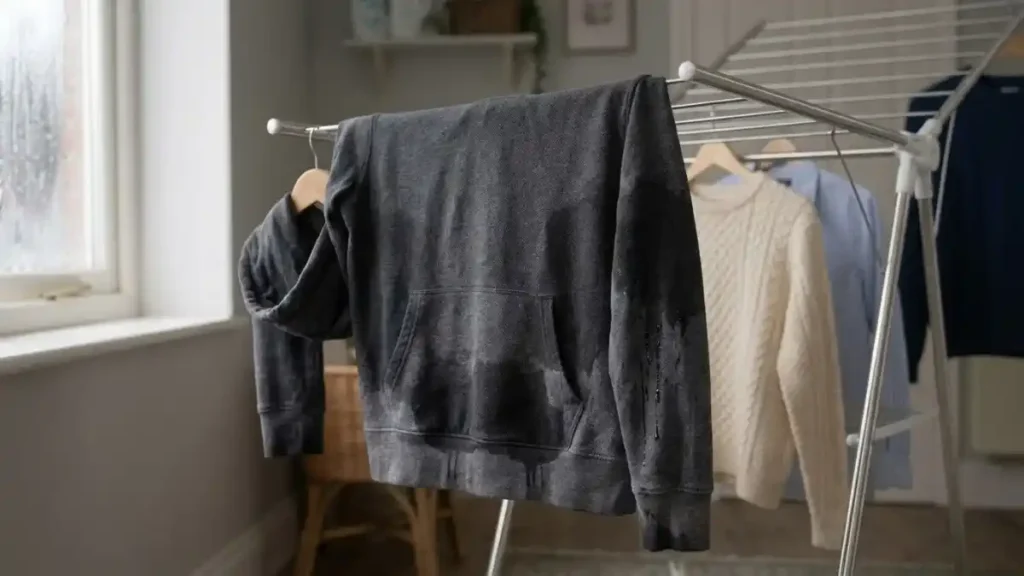
As soon as winter starts in the UK one particular problem shows up every year: drying clothes indoors. Picture this a hoodie has been on the airer for three days and it’s still slightly damp and you’re hoping it’ll finally be dry by morning. On top of that there’s a strange smell in the flat not quite a bad smell not quite normal either just that sense that something somewhere is still wet. If this sounds familiar let me be clear: you’re not alone and this isn’t your fault. According to one piece of research 87% of UK households dry their clothes indoors in winter which means roughly 9 out of every 10 homes are doing exactly what you’re doing.
But here’s something very few people know: a single load of washing releases up to 2 litres of water into the air in your home and if you wash your clothes 3 to 4 times a week that number can reach up to 10 litres in just one week. This is part of why 38% of UK households struggle with mould and why the NHS spends around £1.4 billion every year treating illnesses linked to damp and mould. These numbers aren’t here to scare you they’re here to show you that the frustration you’re feeling is completely valid. The good news is there is a solution and you don’t need a tumble dryer or expensive machines to get there.
In this guide we’ll go step by step through why drying clothes indoors in winter is so slow and how to speed it up. If your flat is small we’ll cover where to dry your clothes and most importantly how to do all of this without letting mould or damp take hold in your flat. By the time you finish this guide you shouldn’t need to visit another website every answer you need is right here.
Quick Answer: Drying clothes quickly in a small UK flat without a tumble dryer in winter sounds hard but it's completely possible. You just need the right approach like using an extra high speed spin cycle on your machine, leaving a gap between clothes on the airer and running a desk fan or dehumidifier in front of them. A spare room or hallway is the best place to dry clothes (avoid the kitchen). On top of that closing the room door and leaving the window slightly open will not only help your clothes dry faster it'll also keep your flat safe from damp and mould.
H2: Why Drying Clothes Indoors Is Harder in Winter
In UK winters, clothes usually take 2 to 3 days to dry, while the same clothes dry in a fraction of that time during summer. Here’s the reason why: warm air has a much higher capacity to hold moisture so wet clothes dry quickly and their moisture moves into the air with ease. In winter that capacity drops which is why the same clothes take much longer to dry. This isn’t just something happening in your flat it’s simple science that plays out in every UK home during winter.
H2: Does Drying Clothes Indoors Cause Damp and Mould

Yes drying clothes indoors can become one of the biggest causes of damp and mould if it isn’t done the right way. When we dry wet clothes they release all their moisture into the air. A single load of laundry holds roughly 2 to 3 litres of water. When those same clothes are dried in a closed room with no airflow that entire 2 to 3 litres turns into moisture in the air and settles in your room which is what starts condensation and mould forming.
In winter when windows stay closed that moisture has nowhere to go and this process just keeps repeating. But this doesn’t mean drying clothes indoors is wrong. Drying clothes in a room isn’t the problem letting that 2 to 3 litres of released water sit trapped in the room is the problem. If you manage airflow and moisture properly you can dry clothes indoors without any mould at all you just need to know where and how to do it.
If mould has already started appearing on your walls, our full guide on how to stop mould in a UK rental bedroom → covers exactly how to deal with it and who’s responsible for fixing it.
H3: Should You Open a Window or Close the Door While Drying
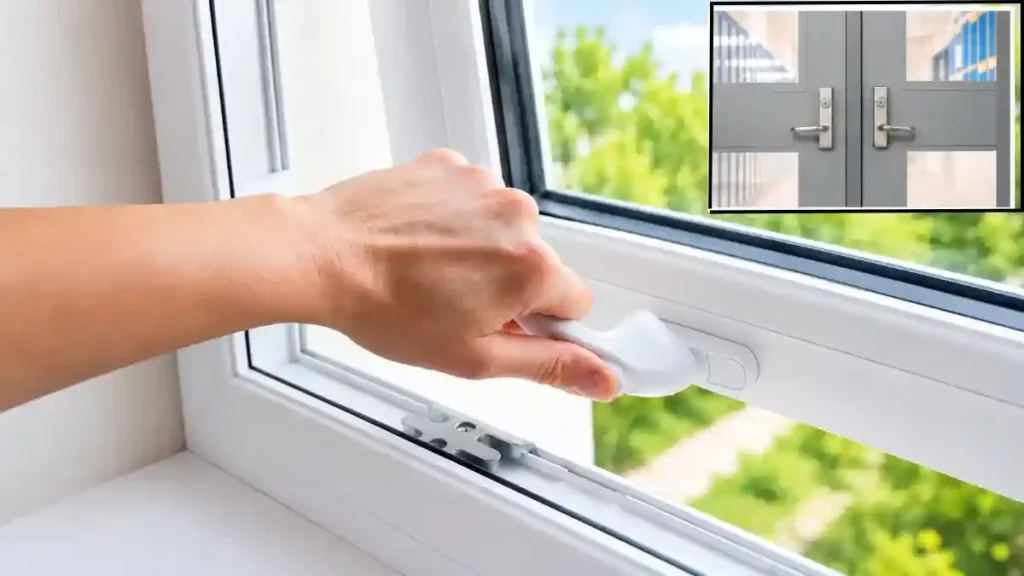
People often get confused about whether to open the windows or keep the door closed while drying clothes indoors. Online videos and blogs give conflicting advice on this, so it’s worth clearing up. Some suggest keeping windows fully closed while drying because cold damp air coming in from outside cools the room down and slows the drying process. They have a fair point leaving a window open for hours in winter does waste heat and cool the room.
But that doesn’t mean you should cut off ventilation completely either since that will only make mould form even faster. The best approach is to combine both ideas:
- Close the door: Keep the door of the room you’re drying clothes in shut so the moisture doesn’t spread into the rest of the flat.
- Short burst ventilation: Instead of leaving windows open all day open them for just 10 to 15 minutes at a time. This lets all the humid air in the room escape without cooling the whole house down.
H3: How to Stop Clothes Smelling Musty When Drying Indoors

The most frustrating part of drying clothes indoors is that musty smell they sometimes get. This happens when clothes stay wet for too long before they finish drying. Once clothes have been damp for more than 24 hours damp loving bacteria start growing inside the fibres and the result is clothes that are technically dry but smell bad enough that you have to wash them again. Follow these steps to keep your clothes free of that musty smell in winter:
- Once your normal wash programme finishes run an extra high speed spin cycle (1200 RPM or higher) before taking the clothes out. This extra 10 minute step removes 30 to 40% more water straight away which cuts your drying time in half.
- Cut back on commercial fabric softener in winter since softener leaves a chemical coating on the fibres that traps moisture and bacteria inside.
- Don’t hang clothes on top of each other or pressed together just to save space on the rack. Leave at least 1 to 2 inches of gap between each item so air can move all the way around them.
- As soon as the washing machine cycle finishes take the clothes out and hang them on the rack straight away. Leaving wet clothes sitting in the drum is the single biggest cause of that musty smell.
H2: Can You Dry Clothes on a Radiator?
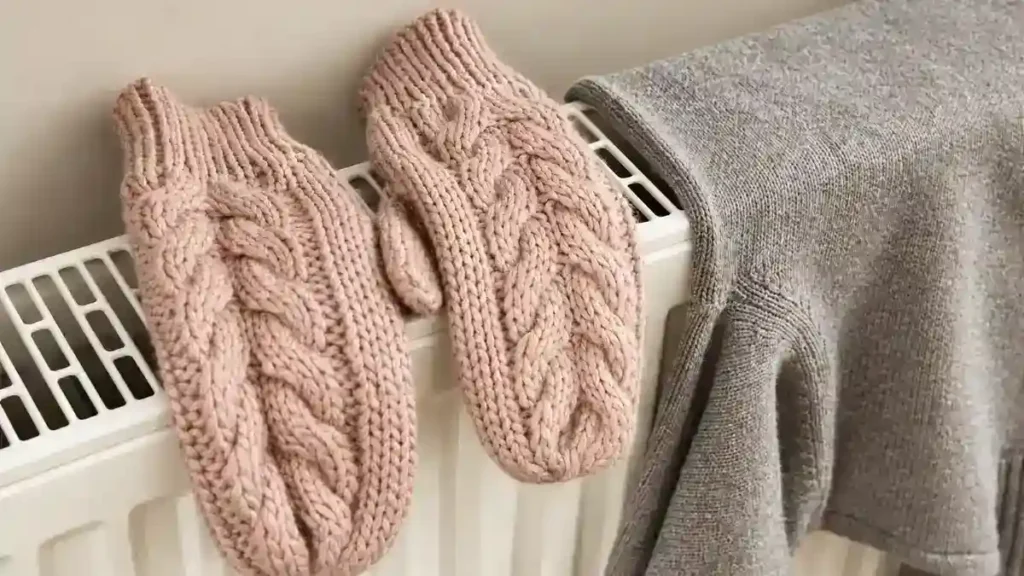
Draping wet clothes straight over a radiator seems like the easiest way to dry clothes in winter but it can cost you both on your heating bill and your health. Drying clothes directly on a radiator creates three main problems:
- A radiator’s job is to heat the room and when you put wet clothes on it that heat gets absorbed into the clothes instead of spreading through the room which means your radiator has to work twice as hard to heat the space pushing your gas and electricity bill up.
- Not every radiator is designed to have things placed on it. According to manufacturer guidelines putting clothes directly on some models can become a fire hazard.
- The detergent and fabric softener chemicals inside your clothes turn to vapour under the radiator’s direct heat and release into the air. If that radiator is in your bedroom or living area you end up breathing in these chemical fumes and moisture all night which can be harmful to your health and affect your lungs.
Better alternative: instead of putting clothes directly on the radiator use a clip-on radiator drying rack which keeps clothes a small distance away from the radiator. Just make sure to keep the room ventilated while doing this.
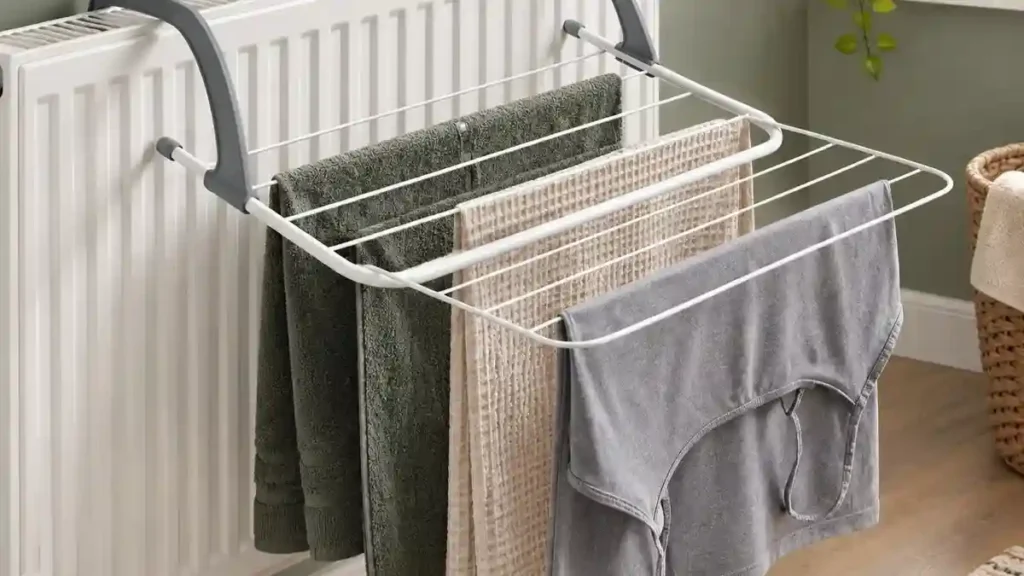
Better alternative: instead of putting clothes directly on the radiator use a clip-on radiator drying rack which keeps clothes a small distance away from the radiator. Just make sure to keep the room ventilated while doing this.
H3: Can a Bedsheet Tent Help Dry Clothes Faster?
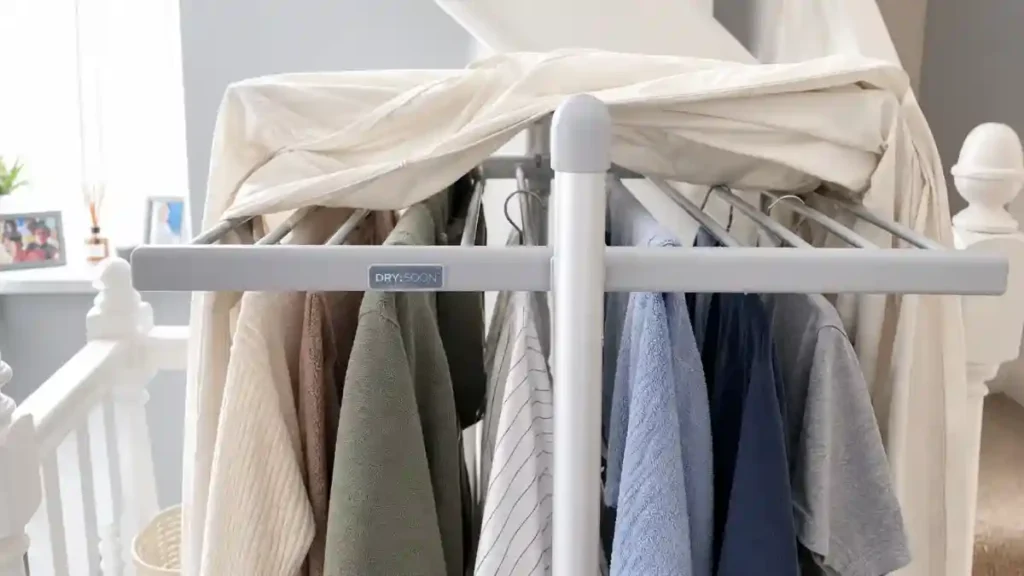
The bedsheet hack or airer tent trick has gone viral on social media but does it actually work? The answer is yes it does. In this technique you hang your clothes on the airer as normal then drape a large bedsheet over the whole thing. The sheet creates a small microclimate that traps warm air around the clothes helping them dry faster. But if you try this hack make sure to follow these three safety rules:
- Keep the airer near a radiator or heater but make sure neither the clothes nor the sheet ever touch it directly. Synthetic fabric touching direct heat can be a fire risk.
- Don’t cover the sheet all the way down to the floor leave a small gap at the bottom so fresh air can get in and the warm moist air inside can escape.
- Keep a trickle vent open or open the window for 10 to 15 minutes to let the moisture building up inside the bedsheet tent escape the room.
H2: Dehumidifier, Heated Airer or Drying Pod: Which Is Best for a Small Flat
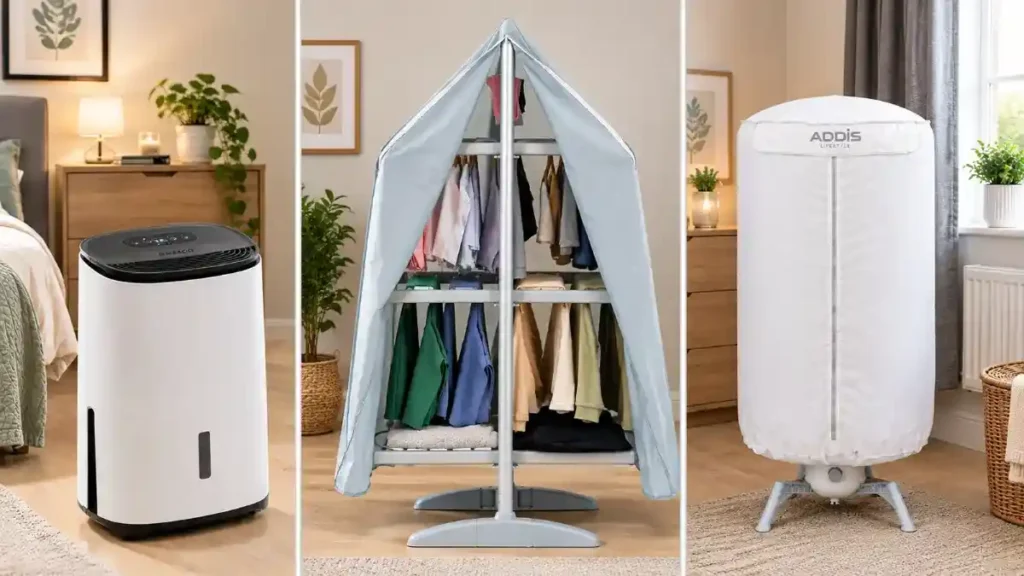
Drying clothes without a tumble dryer in a small UK flat is a real challenge in itself. There isn’t enough space for a large clothes rack and drying clothes without any kind of device becomes a task on its own. I went through exactly this myself early on a small flat, a tight budget and on top of that the fear of the electricity bill. To deal with this a lot of renters end up buying whatever they find online and most people narrow it down to three options: a dehumidifier, a heated airer, or a drying pod. Let’s go through each one.
H3: Does a Dehumidifier Actually Dry Clothes Faster
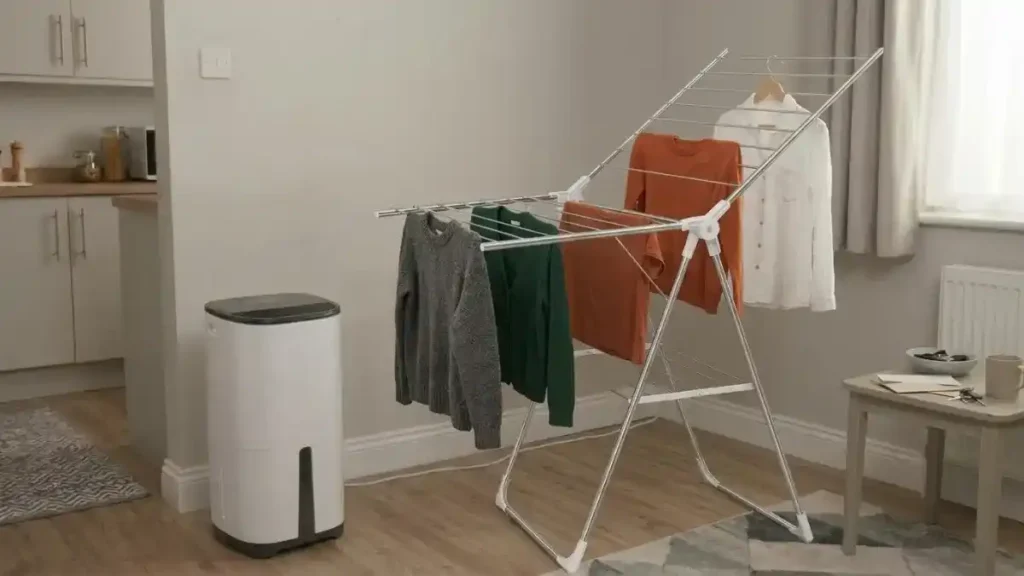
Yes, and if you asked me what the best investment for indoor drying is I’d suggest a dehumidifier without hesitation since it was genuinely useful for me too. A lot of people assume a dehumidifier only pulls moisture out of the air and wonder how that could possibly dry clothes. The science behind it is actually simple: instead of putting heat onto the clothes a dehumidifier dries out the air in the room and once the room’s air is dry the water inside your clothes evaporates into it far more quickly. Here are three ways to use it that I tried myself and found genuinely useful:
- Put the dehumidifier in a small room (like a bathroom or bedroom) and keep the door and window fully closed so moist air from outside can’t get in.
- Place the dehumidifier about 1 to 2 feet away from your clothes rack with its air vent facing towards the clothes.
- Most modern dehumidifiers have a laundry mode or smart dry setting. On this setting the machine runs at maximum speed and pulls water out of the air much faster.
The electricity cost is also very low. I once dried a pair of jeans without a dehumidifier and it took 2 to 3 days. When I dried the same jeans again with the dehumidifier running they were dry in 6 to 8 hours and running the dehumidifier for those 8 hours cost me somewhere between 50p and 70p.
If you haven’t bought a dehumidifier yet and are looking for a good one, you can check out the one I used myself: Check Now →
H3: Are Heated Airers Worth It

If your budget is tight and you can’t afford a dehumidifier a heated airer is the second most popular choice among UK renters. Most renters come across heated airers on Amazon or Dunelm see the price (£40 to £90), and think about buying one but then wonder whether it’ll actually work for them. The answer is yes but only if you use it the right way.
Most renters who buy one complain that clothes only dry where they’re touching the metal bars and stay damp everywhere else and that’s a fair complaint.
But having a cover is essential to making a heated airer actually work well. When you hang clothes on it to dry drape its official cover or a large dry bedsheet over the top. This cover traps the warm air inside essentially turning it into a mini drying oven which dries clothes much faster.
It also uses very little electricity typically around 200W to 300W which works out at roughly 7p to 9p per hour to run. It’s also space friendly since you can fold it away under the bed when you’re not using it. The one downside is that without a cover it can take a long time to dry jeans and thick hoodies and it doesn’t absorb any of the room’s moisture either.
If your flat is small and your budget is limited getting a heated airer with a cover is absolutely worth it. If you haven’t got one yet you can check this one out.
If your flat is small and your budget is limited getting a heated airer with a cover is absolutely worth it. If you haven’t got one yet, you can check this one out →
H3: Are Drying Pods Worth the Money
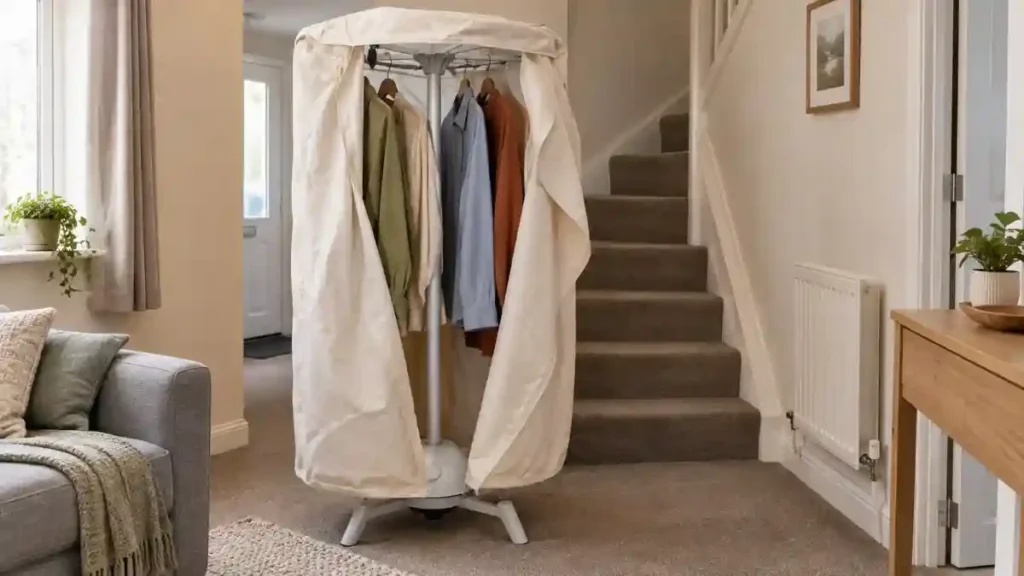
Drying pods are the most viral product for drying clothes right now. They take up very little space since they work vertically which is a big part of why people like them. They’re shaped like a cylindrical tent with a hot air blower at the bottom. They dry clothes very quickly because the warm air circulates fast inside and because of the hanging position clothes don’t end up creased or wrinkled.
There are some clear benefits and some drawbacks. Starting with the benefits: they have a small footprint and because of the fast warm air circulation clothes dry quickly without creasing.
The drawbacks are that the blower or heating element uses 1000W to 1200W of electricity which works out at roughly 28p to 35p per hour considerably more than a dehumidifier or heated airer. The fan inside also creates a light humming noise and lastly it releases moisture into the air rather than absorbing it the way a dehumidifier does so you’ll want to keep a window open or at least a trickle vent while it’s running.
If floor space is genuinely tight and you need fast drying urgently it’s worth it but using it every day will cost more on electricity than a heated airer.
H3: Which Is Cheapest to Run?
| Feature / Spec | Dehumidifier | Heated Airer | Drying Pod |
| Power (Wattage) | 200W – 350W | 200W – 300W | 1000W – 1200W |
| Running Cost (Per Hr) | ~6p – 9p | ~7p – 9p | ~28p – 35p |
| Avg. Drying Time | 6 – 8 Hours | 8 – 12 Hours | 2 – 4 Hours |
| Cost Per Load | ~50p – 70p | ~60p – 80p | ~80p – £1.20 |
| Mould Protection | Yes (100%) | NO | NO |
| Best For | Fast drying & whole-flat mould protection | Small loads & low running budget | Urgent drying & fast results |
H2: Why Are Your Clothes Taking So Long to Dry
In winter, nothing is more frustrating than clothes sitting on the airer for 2 to 3 days only to end up with a musty smell meaning you have to wash them all over again. If your clothes are taking longer than they should to dry there are usually three main reasons behind it:
- The washing cycle
- The airer space
- The room temperature
Let’s look at each of these three issues in detail and see how to fix them.
H3: Your Washing Came Out Too Wet
If your clothes feel heavy when you take them out of the washing machine they’ll take twice as long to dry on the rack. That’s why it’s so important to remove as much water as possible before hanging them up. Here are the two easiest ways to do this which I use myself:
Once your wash cycle finishes run an extra spin cycle in the machine before taking the clothes out. Set your machine to its maximum RPM (such as 1200 or 1400 RPM). This extra 10 minute spin removes a lot more water from your clothes so they come out much lighter and take less time to dry as a result.
Avoid wringing out thick items like jeans, towels and heavy jumpers by hand since this can damage their shape and fibres. Instead, lay a dry towel flat on the floor place the wet jeans or jumper inside it roll the towel up and press down firmly along the roll. This lets the towel absorb the water without damaging the fabric.
This makes your clothes dry even faster. When you remove up to 50% of the water using the machine before hanging clothes on the airer they’ll dry in less than half the time. And if you’re in a hurry and an item is still damp you can use the towel trick again to pull out more water then finish drying whatever’s left with an iron before wearing it.
H3: The Airer Is Overloaded

In small flats where space is tight a lot of renters cram an entire washing machine load onto a single drying rack and the result is clothes that don’t dry properly and end up smelling instead. Overlapping clothes traps moisture with nowhere to escape so clothes dry slower and start to smell. The simple fix for faster drying is giving every item its own space so air can move freely all the way around it. Follow these steps to arrange your airer properly:
- If your space allows it leave one bar empty between hung items rather than filling every single bar since this gap roughly doubles the airflow and helps clothes dry faster.
- Hang thick heavy items (like jeans and jumpers) on the outer bars of the airer where they get the most air and dry smaller items (like socks and underwear) on the inner bars.
- Hang shirts, t-shirts and light tops on hangers at the corners of the airer which saves space on the rack itself and also helps prevent creasing.
- If you have a lot of washing and only one airer wash a smaller load rather than a large one since a smaller load dries much faster on the airer. Trying to save time by doing one big wash often backfires since the clothes end up smelling and need washing all over again and you can’t wear smelly clothes anyway.
H3: Does a Cold Room Make Clothes Take Longer to Dry
Yes, a cold room can take two to three times longer to dry clothes. The simple physics behind it: warm air works like a sponge soaking up moisture from clothes quickly while cold air can’t hold onto moisture in the same way so evaporation from your clothes essentially stops in a cold room.
To save on bills, people often leave the heating off entirely which lets the room temperature drop to 12°C to 14°C, turning the room into something closer to a fridge where moisture from your clothes has nowhere to go and they stay damp for 3 to 4 days. You don’t need to run the heating for 24 hours just 30 to 40 minutes of background heating is enough to bring the room up to around 18°C.
H2: How to Dry Clothes Faster Indoors
Now that you understand why your clothes are staying wet for so long let’s look at the practical simple methods that can dry your indoor laundry much faster. You don’t need a tumble dryer or a lot of extra electricity to dry clothes in winter just a few smart techniques the right airer arrangement and a couple of simple hacks can cut your drying time in half.
Let’s go step by step, from the moment the washing machine finishes right through to drying heavy items like jeans and hoodies in no time.
H3: What to Do Straight After the Washing Machine Finishes
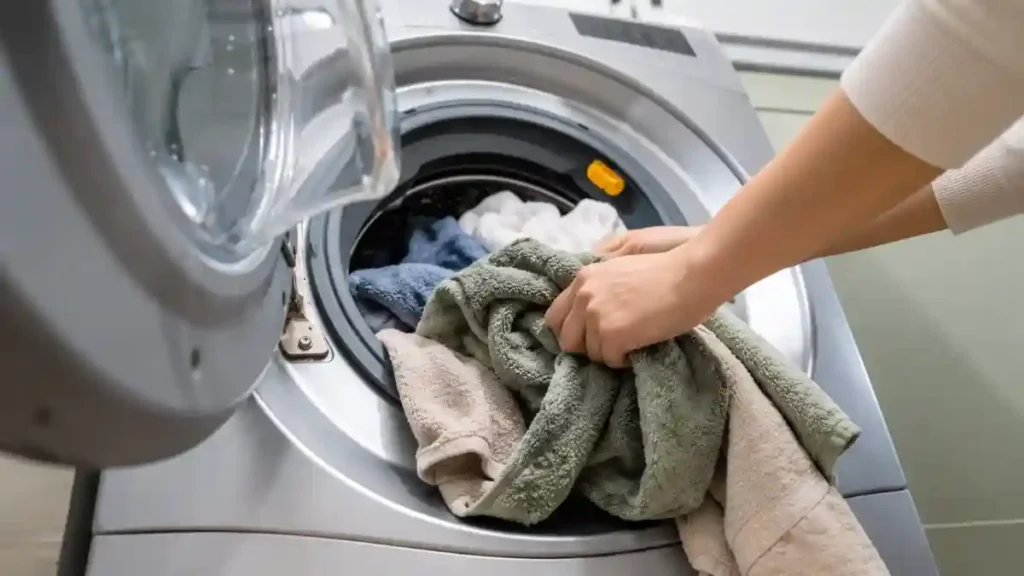
The moment your washing machine finishes its cycle and beeps the next five minutes matter a lot. If you leave wet laundry sitting in the machine that humid environment starts causing damp and bad smells almost immediately. As soon as the machine finishes follow this five step routine:
- Use a high spin cycle: Before taking the clothes out run an extra 10 minute spin at the machine’s maximum RPM. This removes about half the water from your clothes and this single step alone removes 30 to 40% of the water.
- Take clothes out straight away don’t leave them in the machine: The longer wet clothes sit in a closed, damp machine, the higher the risk of smell and bacteria growth.
- Give each item a light shake: Before hanging clothes on the airer give them a good shake. Since clothes tangle together in the machine shaking them loosens the fibres creating pathways for air to move through which speeds up drying and reduces wrinkles at the same time.
- Choose the warmest most ventilated room: If any room has a radiator that’s your best choice for drying clothes. Position the rack as close to the heat source as space allows.
- Hang immediately while warm: Clothes coming out of the machine hold a little warmth so hang them up straight away so evaporation can start the moment they meet the room air.
H3: How to Dry Clothes Overnight
Most renters wash their clothes in the evening after work or college and want them dry by morning so they can wear them before heading out. And honestly I think this is one of the best times to dry clothes since there’s no one walking in and out of the room disturbing the process. Follow these three steps to get your clothes fully dry overnight:
Step 1: Isolate in the smallest room: Put the airer in the smallest room in your home (like a bathroom or bedroom) and close the door so heat gets trapped and the drying process speeds up.
Step 2: Set up a dehumidifier or heated airer:
- Dehumidifier: Place it near the airer and let it run on laundry mode all night. This will use roughly 50p to 60p of electricity overnight.
- Heated airer: Drape a large dry bedsheet over the clothes so the heat stays trapped inside.
Step 3: Pre-warm the room: Turn the room’s heating on 30 minutes before bed so the room is warm and moisture can evaporate quickly.
Safety note: Never run a portable fan heater overnight while you sleep. For overnight use, only a dehumidifier or a covered heated airer are safe options.
H3: Does a Fan Help Clothes Dry Faster Indoors?

Yes! A fan can speed up the drying process by up to 50%. Here’s the simple explanation: when you hang wet clothes the water from them moves into the surrounding air making that air damp too. Running a fan pushes that damp air away and brings fresh drier air back to the clothes. This is what makes clothes dry so much faster the fan is essentially clearing away the damp air around your clothes so they keep drying.
A lot of renters worry that running a fan will push their electricity bill up but that’s not really the case. A typical fan only uses 25W to 45W of electricity which costs roughly 1p to 2p per hour to run meaning even running it all night only costs around 10p to 15p in total which is actually less than a dehumidifier.
H3: How to Dry Thick Clothes Like Jeans, Hoodies, and Towels Faster
Jeans, thick hoodies, jumpers, and bath towels take the longest to dry in winter since water gets trapped in their pockets, hoods, and thick fabric. Use these simple hacks to dry these heavy items faster:
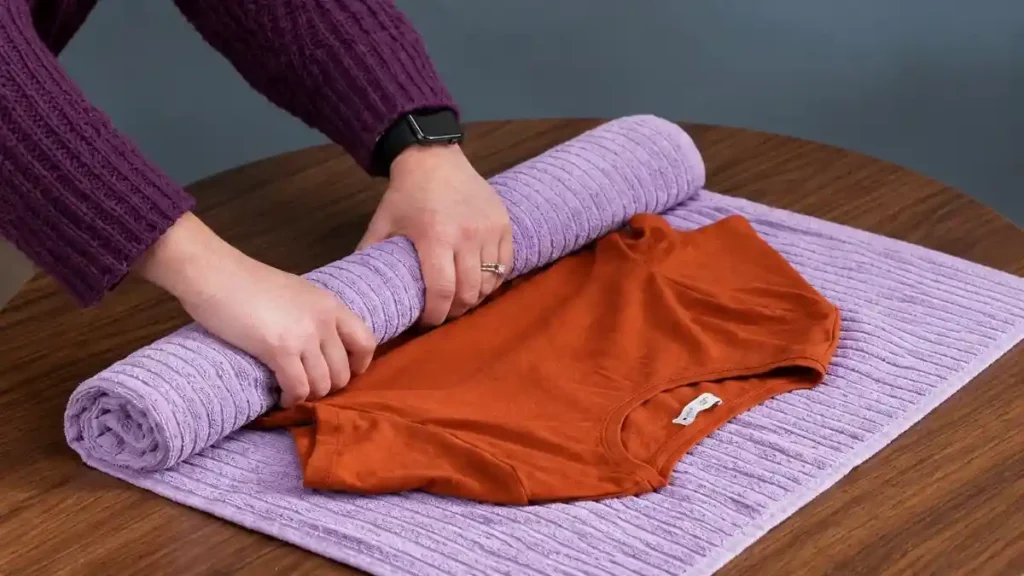
The towel rolling hack (for jumpers and sweaters): Wringing woollen jumpers and sweaters out by hand can damage both their shape and fibres. This is the best way to dry them instead:
- Lay a completely dry bath towel flat on the floor.
- Place your wet jumper or sweater on top of it.
- Roll the towel and jumper up together like wrapping a roll.
- Press firmly along the roll with your hands. This pulls out roughly half the water straight away and the jumper will dry much faster once it’s on the airer afterwards.
Jeans: The pockets and waistband of jeans take the longest to dry. Always hang jeans inside out so the pockets get direct airflow. Either peg them upside down by the hem or open the legs out flat across two bars of the airer.
Hoodies: Always hang hoodies using two hangers. The hood and armpits of a hoodie tend to stick to the back of the fabric and stay damp for two days if you don’t separate them. Put the hoodie on one hanger and hang the hood over a second hanger so the fabric doesn’t stick to itself and air can pass through properly.
Towels: Never fold a towel over a single bar of the airer to dry it. Doubling a towel over like that blocks air from passing through which can leave it taking 2 to 3 days to dry. Instead always open the towel out flat across two or three bars of the airer (the way you’d lay a sheet over a bed). This lets air move underneath and through the towel properly so it dries much faster.
H2: Where to Dry Clothes in a Small UK Flat
The biggest problem in a small UK flat is finding somewhere to put the clothes rack. Space is already tight and opening up a rack can eat up whatever walking room you had left. On top of that putting the rack in the wrong spot means clothes take longer to dry and start to smell. Let’s look at the best places to put your rack in a small flat.
H3: Best Room for an Indoor Clothes Airer
UK renters usually have very little space to work with so what they really want is somewhere clothes will dry quickly without creating dampness.
If you have a small spare room or a landing or hallway that’s the best spot for drying clothes. It works well because you can close the door and trap the moisture in one place and if you have a dehumidifier or fan running it there dries clothes even faster.
Avoid drying clothes in the kitchen or the living room. In the kitchen clothes can pick up cooking smells like spices or oil while in the living room people walking in and out all the time tends to block the space and get in the way.
H3: Where to Put an Airer in a Small Bedroom
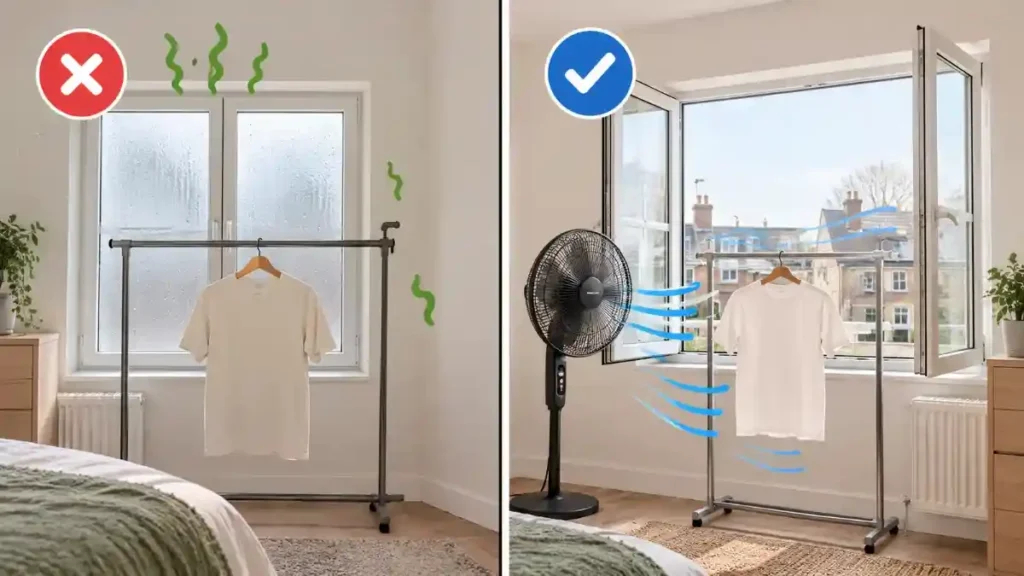
If you genuinely have nowhere else to put the airer and you’re forced to keep it in your bedroom use this method:
- Keep the airer as far from your bed or mattress as possible so the bedding doesn’t absorb the moisture.
- Position the airer near the window so moisture can escape and keep the trickle vent open.
- Instead of blocking the bedroom floor use vertical space like the back of doors or hangers.
- If your airer is full and you have more clothes than it can hold use a curtain rod instead of piling clothes on top of each other. Put clothes on hangers and hang them from the rod this is one of the best ways to dry extra items. If your airer is small and you have a lot of laundry this hack is genuinely useful and it’s one I’ve used myself. It gives clothes open access to air so they dry faster and you don’t need to find room for an extra rack on the floor either.
- Keep the door of the room where clothes are drying closed so the warm air doesn’t escape but leave the doors of the rest of the flat’s rooms open. This keeps air moving through the whole flat so moisture doesn’t build up and settle in one spot.
H3: What If You Have No Balcony or Outside Space
Most UK studio flats and basement apartments have no balcony or garden at all which means renters end up drying their clothes indoors all year round. But you can still dry clothes completely without a balcony and save space while doing it.
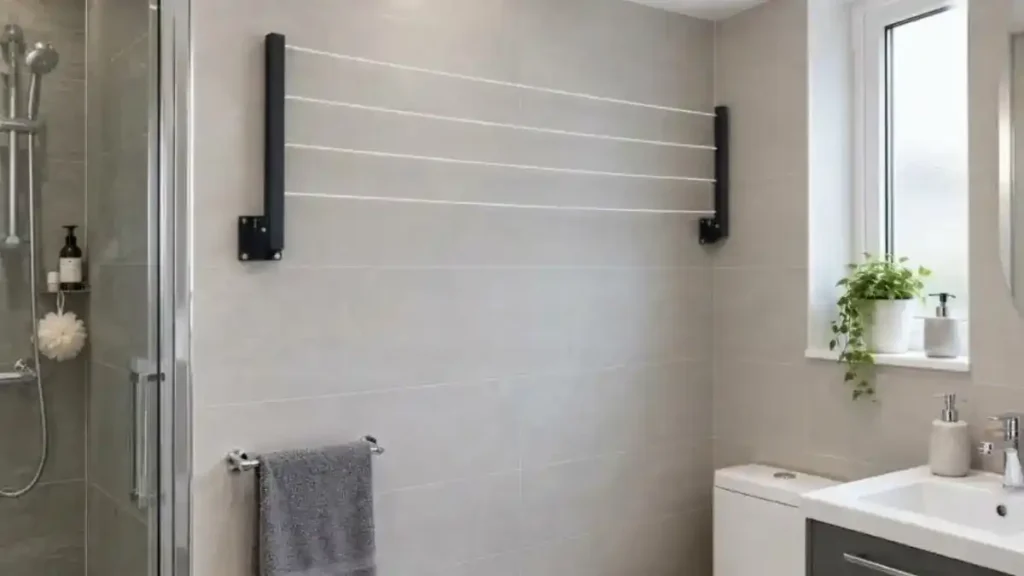
Without a balcony a large floor standing airer takes up a lot of room and makes it hard to move around. A wall mounted solution is a good alternative. The main benefit is that it sits flush against the wall you open it up when you need to dry clothes and fold it back down once they’re dry. This means the floor space stays completely free keeping walking room clear even in a small flat and it’s worth fitting it in a room with a radiator. “check with your landlord first, as this type usually needs drilling”
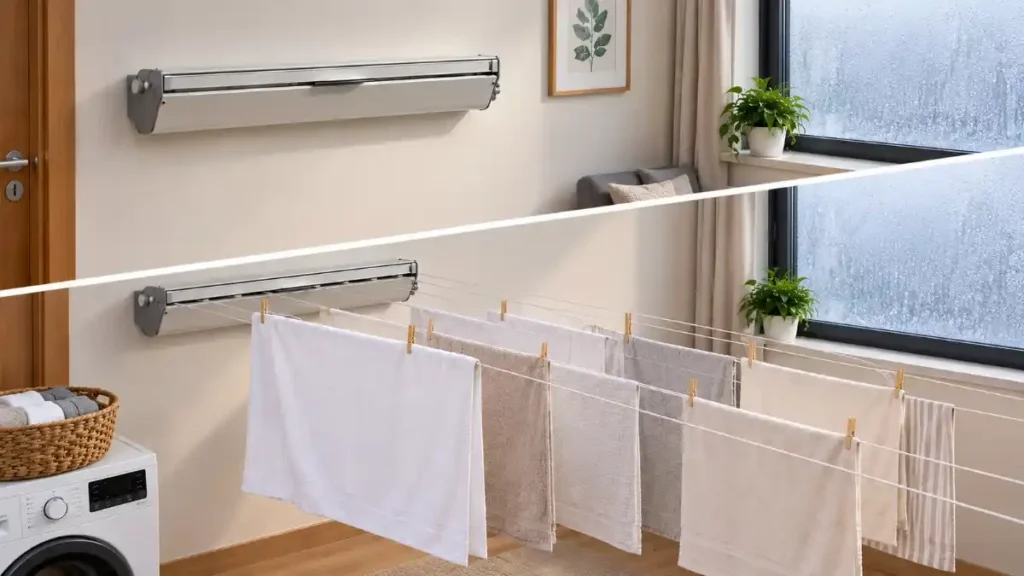
You could also use a retractable clothesline which I use myself and find really useful. It’s a small box containing a nylon line. These come in two types: one that needs drilling, where you screw it into the wall using two or three holes which is very strong and good for hanging heavier items. The other type is glue based coming with a strong industrial adhesive or heavy duty pads that stick to tiles or a smooth wall without any drilling
For UK renters this is the safer option since you can’t drill holes in a rented flat. It’s very easy to use too pull the line out and hook it onto the wall opposite when you need to dry clothes and let go once they’re dry so it retracts back into the box. This is also worth fitting in a room with a radiator.
A wall-mounted, space-saving setup like this fits well with other small-flat solutions too. If you’re looking for more ways to make the most of limited space, check out our guide on vertical storage ideas for renters →
You can also get an over the radiator rack which is available cheaply (£5 to £10 from B&M, Dunelm, or Amazon). It needs no drilling and simply hangs directly over the radiator. It’s great for drying socks, underwear, and small t-shirts quickly. It also uses zero floor space and can be easily taken down and stored in a cupboard once you’re done.
A tension rod is another option a rod that fits between two walls (like in a hallway, an alcove, or over a bathtub). It uses spring pressure so there’s no drilling or screws needed. Put it up when you need it and take it down once your clothes are dry.
H2: Is Drying Clothes Indoors Bad for Your Health
If your flat only has one room and it’s your bedroom never dry clothes in there overnight since wet clothes raise the moisture in the air which leads to mould and dust mites forming and these can worsen asthma, allergies, and breathing problems.
Sleeping in a room where clothes are drying overnight can genuinely be harmful. While you sleep you spend the whole night breathing in extra moisture and mould spores through the air into your lungs. Doctors and UK health experts including the NHS and Asthma UK, strongly advise against sleeping in a room where wet clothes are drying.
If you have more than one room you can wash clothes at night. Otherwise wash in the morning since you’ll be walking in and out of the room throughout the day while the clothes dry which causes far fewer problems. Whenever you dry your clothes turn on the room’s fan straight away or better still run a dehumidifier which pulls moisture out of the air and dries your clothes faster at the same time.
H2: What Is the Cheapest Way to Dry Clothes Indoors in Winter

Electricity bills get very high during UK winters which renters like us often struggle to keep up with so we end up looking for the cheapest possible way to dry our clothes. Here are four methods that can dry your clothes without costing much at all:
Extra spin cycle (zero extra cost): Once your machine finishes washing run an extra spin cycle (1200 or 1400 RPM) before taking the clothes out. This only takes 2 to 3 minutes and uses next to no electricity. It wrings out the extra water hidden inside your clothes which also cuts drying time in half.
Standard airer plus a small fan: Rather than buying an expensive powered rack use a simple £10 to £15 metal stand and run a small desk fan in front of it. The fan keeps clearing the damp air around your clothes helping them dry much faster and a normal fan uses very little electricity (only 15 to 20 watts).
Dehumidifier vs heated airer: A heated airer uses more electricity and only dries the clothes actually hanging on it. A small dehumidifier by comparison pulls moisture from the whole room and running one costs very little per hour (just 10p to 15p). A dehumidifier also dries clothes faster and protects your walls from mould.
Keeping clothes near the radiator: Never place wet clothes directly on top of a radiator. Keep the rack 1 to 2 feet away directly facing it. When you put wet clothes straight on a radiator its warm air doesn’t spread through the room which forces your central heating or boiler to work harder to warm the space pushing up your electricity and gas bill. Keeping the rack 1 to 2 feet away instead lets air pass through the clothes to dry them while still warming the room properly.
H2: A Small Flat Drying Routine That Actually Works

Wash in the morning: Washing clothes in the morning means they have all day to dry keeping the air in your bedroom clean while you sleep at night which removes the health risk entirely.
Run an extra high spin cycle: Use your machine’s highest RPM (1200 or 1400) spin so extra water is removed before clothes even reach the airer.
Towel roll heavy items: Wrap heavy items (jeans, hoodies) in a towel and press down to remove extra moisture before hanging them up.
Wash smaller loads: Rather than cramming too many clothes in at once wash smaller loads so there’s enough room on the airer for air to pass through.
Choose the right room: Pick a warm room keep the door closed and leave the window’s trickle vent slightly open so moisture can escape.
Leave gaps between clothes: Hang light clothes at the top and heavy clothes lower down facing the radiator at a safe distance.
Run a fan or dehumidifier: Don’t rely on natural air alone turn on a small desk fan or dehumidifier in front of the airer.
Keep it facing the radiator, not on top of it: Never put clothes directly on the radiator keep the stand 1 to 2 feet away facing it so warm air passes through the clothes.
H2: Frequently Asked Questions
How to dry clothes in winter without a tumble dryer?
Good ventilation, a warm room and a little gap between each item of clothing lets you dry clothes without a tumble dryer. If you have a dehumidifier or heated airer it’ll work even faster.
What is the best way to dry clothes indoors in winter in the UK?
A warm well ventilated room (like a spare room or hallway) works best. Keep the door closed so moisture doesn’t spread through the rest of the flat and leave the window slightly open or open the trickle vent.
Can I dry clothes outside in winter in the UK?
Yes but only on days without rain or frost. Even if it’s cold clothes can dry outside as long as it’s sunny or windy just avoid putting them out on rainy days.
What can I use instead of a tumble dryer?
You can use a normal airer with a small desk fan, a dehumidifier, or a heated airer. These three are the best and cheapest alternatives to a tumble dryer.
How do Brits dry their clothes without a dryer?
Most people in the UK use a folding clothes airer. Since older UK flats often have limited space people tend to keep the airer near a radiator or in the bathroom to dry clothes.
Can you really dry clothes in 30 minutes or 1 hour without a dryer?
A full load will never fully dry in 30 to 60 minutes. But a small single item like a shirt or a pair of socks can dry near a heater in that time.
What is the best drying rack for a small apartment?
A vertical (tall) tiered airer or a wall mounted stand work best for small flats since they don’t take up floor space and can sit flush against the wall.
What is the cheapest way to dry clothes indoors in winter?
Hanging clothes on a normal metal stand and managing your windows and doors properly is completely free. If you want a bit more speed run a small desk fan in front of it which only costs 1p to 2p per hour.
What is the healthiest way to dry clothes?
Drying clothes during the day with good ventilation is the healthiest approach. If you only have one room avoid drying clothes in the bedroom overnight to prevent mould and allergy problems.
Why shouldn’t you dry clothes overnight in your bedroom?
While you sleep your own breathing already adds moisture to the room. If wet clothes are also drying in there, the moisture builds up far more which can lead to mould forming on the walls and a higher risk of asthma or allergies.
Can I dry clothes with a hair dryer?
Yes, but only for a small item in an emergency like a pair of socks or a shirt collar. Drying a full load of clothes with a hair dryer wastes a lot of time and electricity.
How to dry clothes if your washing machine’s spin doesn’t work properly?
Wrap clothes tightly in a dry towel and press firmly (the towel rolling hack) or wring them out by hand to remove extra water. The more water you remove before hanging them up the faster they’ll dry.
What should I do if my dryer suddenly breaks?
There’s no need to panic. Buy a normal airer, run a fan or dehumidifier in front of it, and use an extra spin cycle. These methods can dry your clothes quickly even without a dryer.
How long do clothes take to dry outside overnight in winter?
Don’t leave clothes outside overnight in winter. Dew and frost will leave them stiff and frozen rather than dry. Only dry clothes outside during the day in winter, and only when there’s no dew around.
H2: Conclusion
Drying clothes indoors in a UK flat without a tumble dryer in winter is admittedly a bit of a challenge but with the right approach you can easily avoid damp, mould and high energy bills all at once. You don’t need to spend money on expensive equipment or machines just an extra spin cycle the right airer placement and a bit of ventilation can make your laundry routine much easier exactly as covered throughout this guide.
Start building these small habits into your daily routine today so your clothes dry faster, your electricity bill stays lower and your flat stays safe and comfortable all winter. You’ll be happier for it and since there’ll be no mould building up you won’t run into any issues with your landlord either. Thanks for reading.
About the Author
Written by Faizan Ali
Founder of GlowUpMyRoom, sharing practical, deposit safe home organisation and rental living tips for UK and US renters.
Last updated: 4 October 2026
Sources: NHS.uk, Energy Saving Trust, Which.co.uk, University of Manchester, Mackintosh School of Architecture and UK Council Guidelines.